Research Engagement Platform - Slurpedia
Duration
Jan 2025-May 2025
Client
7-Eleven (7Now App)
My Role
Researcher | Content Creator | User Testing
Research Question
How might we make user research and persona insights easier to access, share, and use during the early stages of product design?
The Problem
Through conversations with UX researchers, designers, and product managers, we identified a recurring issue:
User research existed—but it was not consistently influencing design decisions.
Several challenges contributed to this gap:
Research insights were difficult for designers to access quickly
Personas were created but rarely integrated into daily workflows
Collaboration between research and design teams was often reactive rather than proactive
Research findings were delivered in large reports that were rarely revisited
As one designer noted during interviews:
“I find usability studies more useful. Personas are rarely used in the design process.”
This revealed a critical disconnect between research generation and research adoption.
Research Question
How might we make user research and persona insights easier to access, share, and use during the early stages of product design?
Understanding the Problem
Our research plan focused on understanding:
How personas were currently used at 7-Eleven
How research insights were shared internally
What barriers prevented research from influencing design decisions
How other organizations integrate personas into their workflows
We conducted secondary research and stakeholder interviews to identify opportunities for improvement.
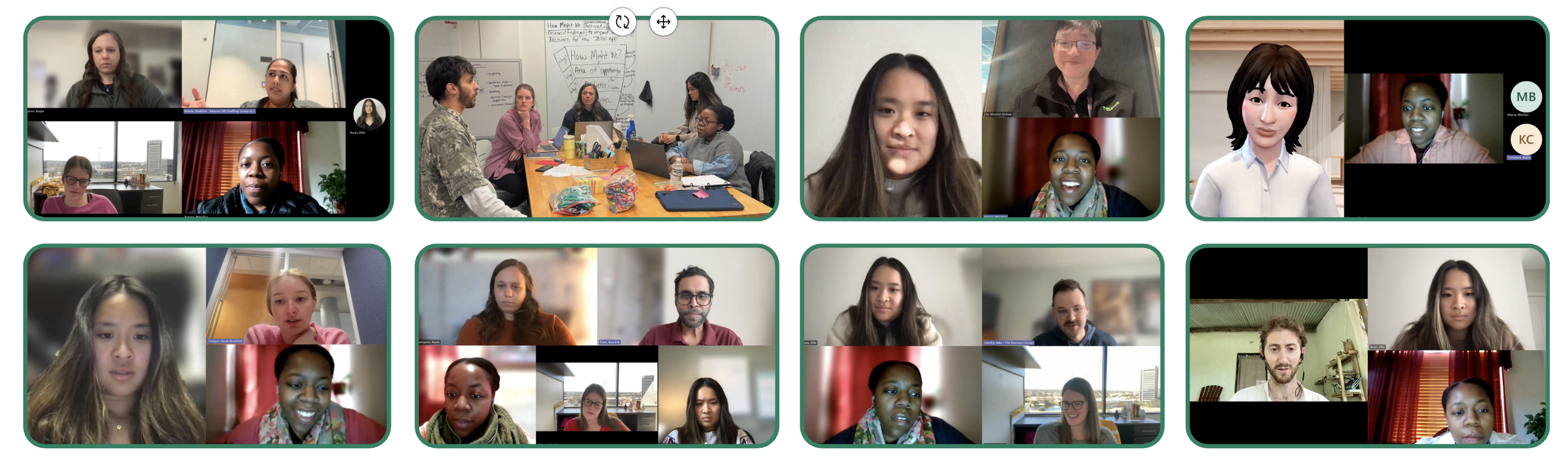
We interviewed professionals across design, research, and product roles at 7-Eleven.
Participants included:
UX researchers
UX designers
product managers
UX leadership
These conversations helped us understand how research actually flows through the organization.
We explored different types of personas and how they are used across organizations.
Proto Personas
Based on team assumptions
Used early in projects to align internal thinking
Qualitative Personas
Built from interviews and qualitative research
Focused on motivations, behaviors, and goals
Statistical Personas
Developed through large-scale surveys and data clustering
Combine qualitative and quantitative insights
Research also showed that design aesthetics and emotional engagement play a significant role in food delivery app usage, influencing:
Continued app usage
Customer loyalty
User satisfaction
Other key factors influencing delivery app adoption included:
Online reviews and ratings
Ease of order tracking
Habit and social influence
Information quality and usability
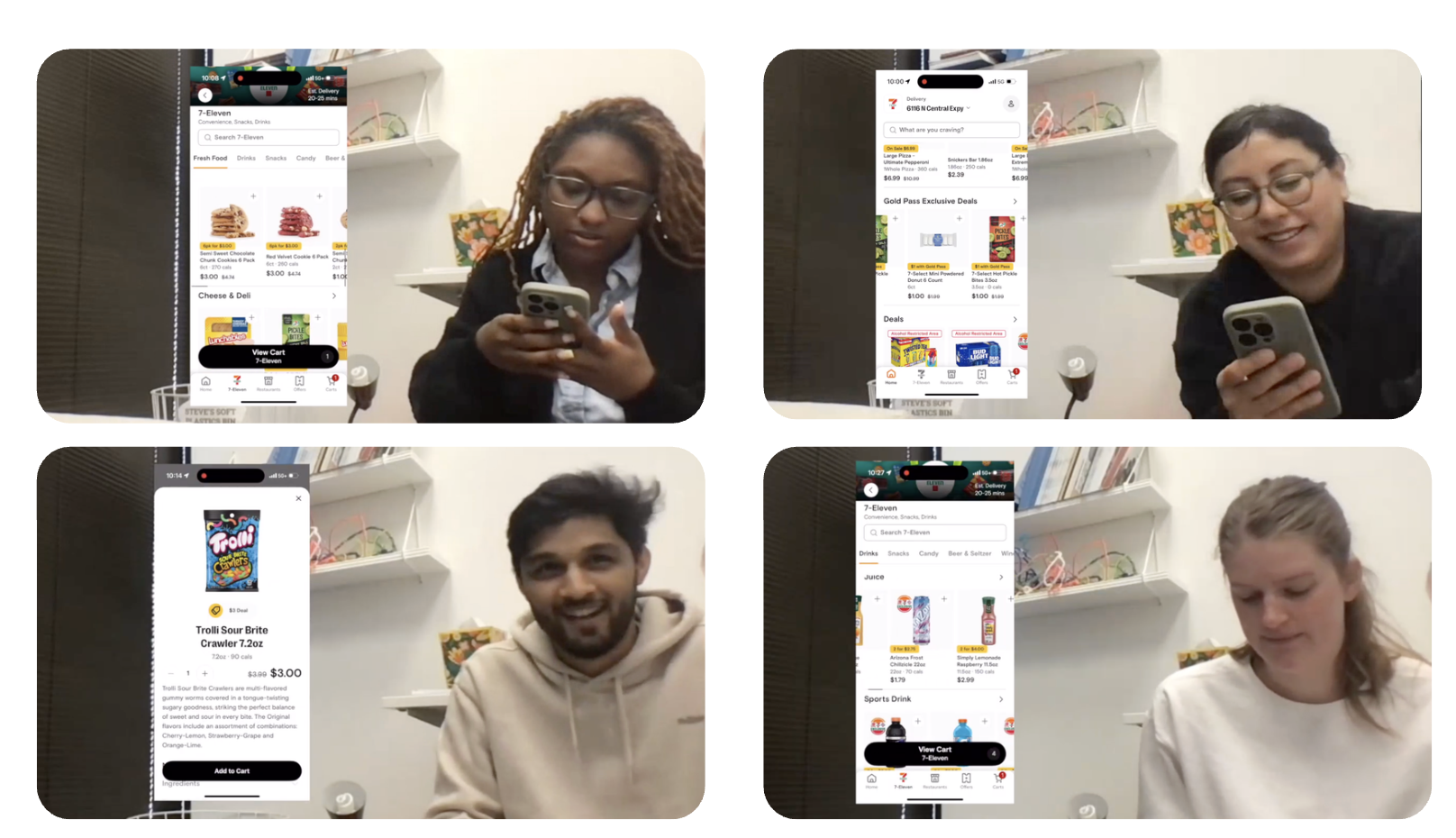
Key Insights
1. Research and design collaboration is often reactive
Designers typically engage researchers after a design concept already exists, using research primarily for validation rather than discovery.
This limits the potential impact of research insights.
2. Personas are undervalued in the current workflow
Several designers indicated that personas are rarely used when designing features.
Instead, teams rely more heavily on:
usability testing
task analysis
prototype testing
Personas were seen as helpful for empathy-building, but not necessarily for daily design decisions.
3. Research insights are difficult to access quickly
Research findings are often shared in large reports or presentations, making them difficult to reference during day-to-day design work.
Teams needed short, digestible insights that could spark ideas quickly.
4. Designers and researchers want stronger collaboration
Across interviews, participants expressed interest in:
more frequent conversations around research
easier access to insights
shared understanding of users
Imagine and Refine
Slurpedia
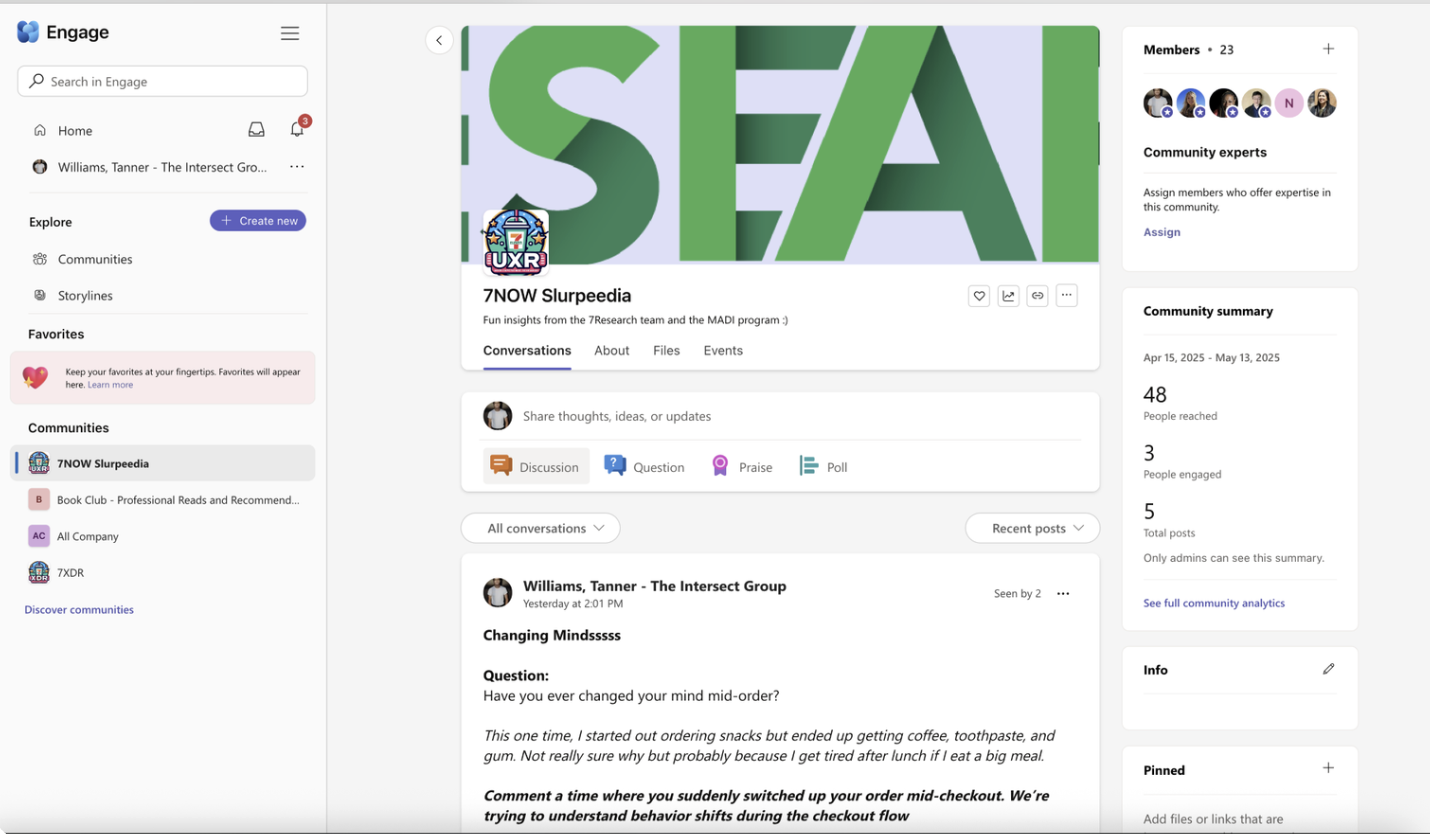
Slurpedia is an internal research-sharing platform designed to bring research insights into everyday team conversations.
Built using Microsoft Viva Engage, the platform acts as a casual knowledge base for research insights.
Rather than storing research in static reports, Slurpedia encourages teams to share small, engaging insights that spark conversation and inspire design ideas.
Key Features
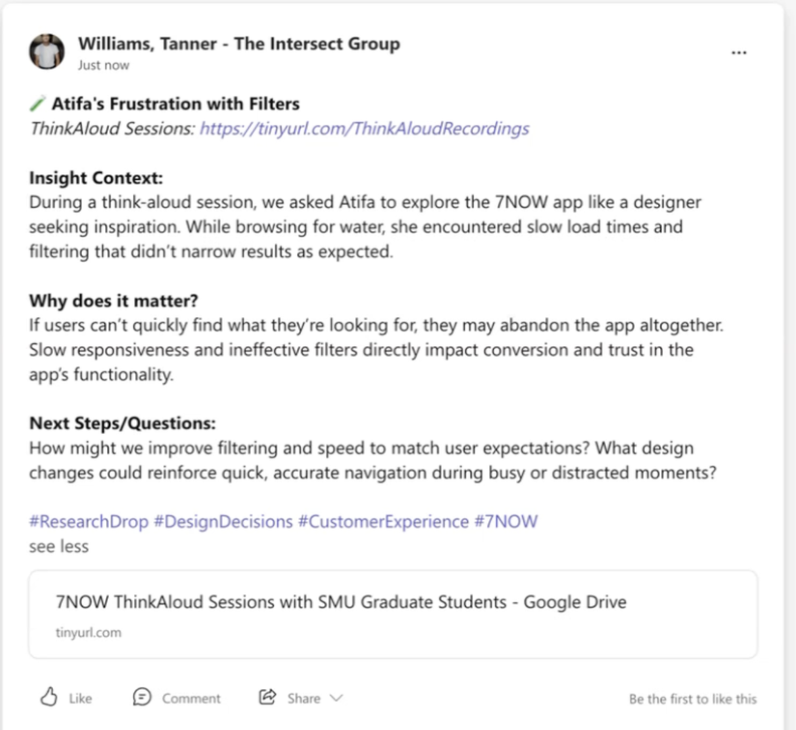
Research Nuggets
Short, digestible insights posted regularly.
Examples include:
user behaviors
research highlights
surprising insights from interviews
These quick insights help designers engage with research without needing to read long reports.
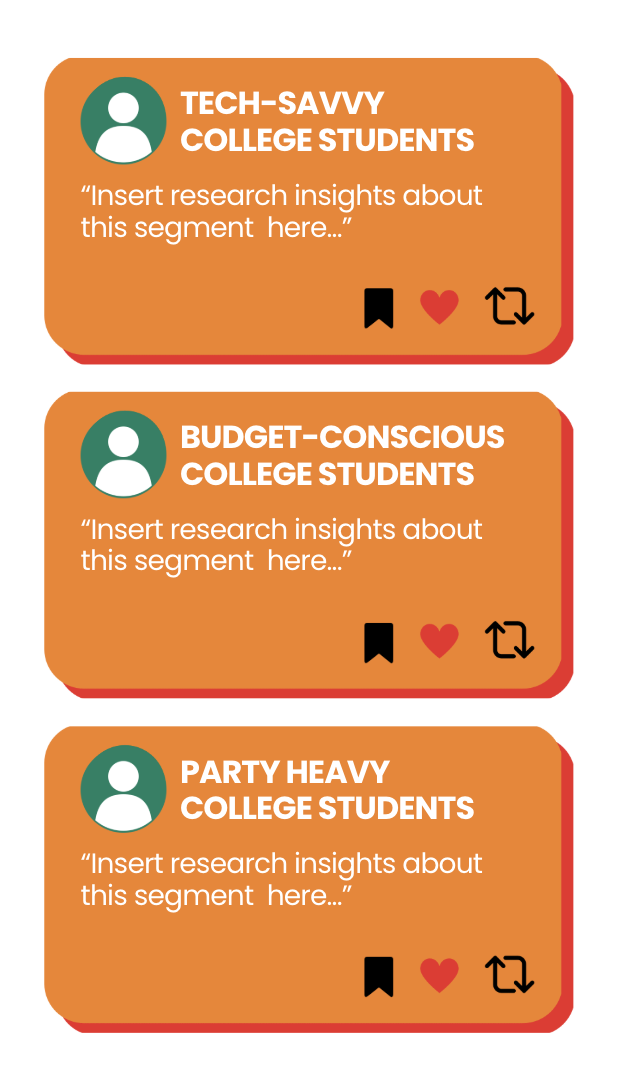
Community-Based Sharing
Slurpedia uses different communities within Viva Engage to organize research conversations.
Communities can be created for:
product teams
design groups
research initiatives
specific user segments
This encourages cross-team knowledge sharing.
Instead of focusing only on creating better personas, we realized the larger opportunity was making research easier to share and discuss across teams. This insight led to the concept of Slurpedia.
Purpose:
To determine if people are actually moved to engage further with the farm after exposure to stories.
Research Posting Templates
To keep insights concise and useful, we created simple posting templates including:
key research insight
supporting evidence
potential design implications
This format ensures research stays practical and actionable.
Community Guidelines
Clear posting guidelines help maintain quality and consistency. These guidelines ensure posts remain:
relevant
easy to read
connected to real user insights
How Slurpedia Changes the Design Process
Instead of research appearing only at the end of projects, Slurpedia introduces casual research engagement at the beginning of the design process.
Benefits include:
Designers see research earlier in their workflow
Teams develop stronger empathy for users
Research insights spark new design ideas
Conversations between research and design increase
Tell
Slurpedia helps organizations move toward a research-led design culture.
Key outcomes
Increased visibility of user research
More frequent research discussions across teams
Stronger collaboration between research and design pods
Greater empathy for customer needs
Ultimately, the platform helps teams design the 7NOW app based on real user insights rather than assumptions.
Key Takeaways
This project reinforced several important lessons about human-centered design.
Research only creates impact when it is used
Even strong research loses value if teams cannot easily access or apply it.
Culture matters as much as tools
Encouraging conversation around research is just as important as creating research artifacts.
Small insights can spark big ideas
Breaking research into smaller, digestible insights makes it easier for teams to engage with and apply user knowledge.